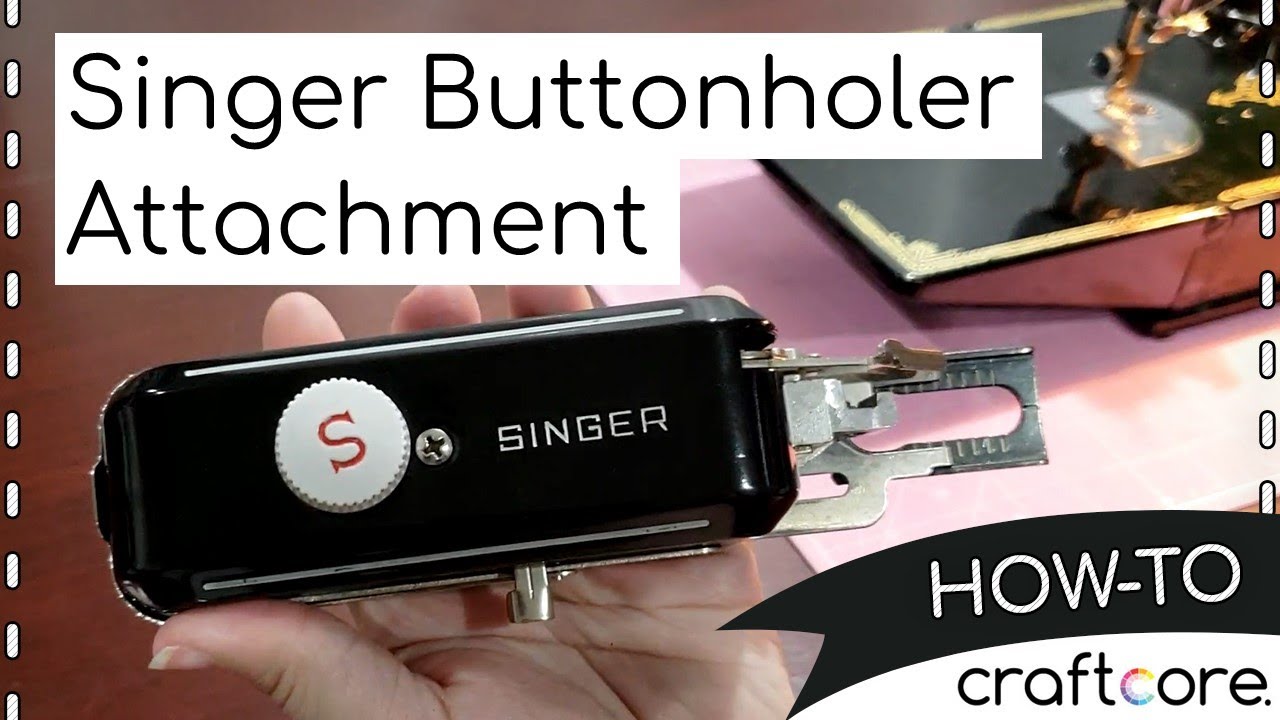
Hello!
I want to know the right tools to manufacture a small cam accurately. Metal is preferable.
.
I would like to modify this cam for my sewing machine project. the total size is about 1.75x75in.
This cam allows a buttonhole machine to make a keyhole buttonhole. I would like it to be just the top circle part, so I can sew eyelets.
I used digital calipers to calculate the size, and determined a circle would have 15 teeth, 24degrees apart. Currently the face is a vector, I realize it would probably need to be a 3d file, but I don’t know if the shapeoko is the right tool for this or if I should be looking at a different one entirely.
I would CAD the whole thing out and print it resin. That should be enough to get the geometry right.
No Shapeoko is not the right tool. Fusion 360, Solidworks or Inventor will make it much easier to tune in the geometry. Figuring out the correct Modules and pressure angle of the gear teeth will be the trick
and if there is any profile offsetting.
Once you have the geometry right I would get this part SLS 3D printed in steel.
The original part look like it was die cast so a 3D printed part in metal should be just fine strength wise.
I heard a rumor that 3D Fab has a scanner. That may be accurate enough to make s model from. Does the resin printer have the resolution and accuracy for this?
not even a little bit. @themitch22 do you have a picture of the 10x10 you made?
yep! it may take some tuning to figure out the amount of distortion/shrink/swelling you will get from your given resin. But once you know what and how much distortion you are getting scaling up or down as need should be pretty straightforward.
I mean, am I overthinking this. Could I just take a mold of the positive, flip it around, fill in the void, and then take another mold of the grafted piece?
Possibly - The tolerance on these buttonhole templates doesn’t have to be very tight but you will probably have about 2 - 3% shrinkage in your final part.
Take the original. Make a silicone mold using LiquaFast ICE casting resin. Shoot wax into it using the wax injector in Jewelry. Cast that in bronze. Plan to machine or file the bottom flat in order to use it.
But here’s the rub. Shrinkage. The LiquaFast doesn’t shrink. The wax may shrink a bit. The bronze will shrink about 1.56%. So your cast part will likely be about 2 - 3% smaller than your original.
You could possibly machine it on the Shapeoko XXL, but you’d have to beat yourself real hard to do that. IIWM, I’d cast it.
Model it using something like Fusion 360. If the gear face is already a vector you’re half way there.
Plan to print it in wax resin and then cast in bronze. (We cast in bronze, silver or gold. Obviously bronze is the most appropriate choice for you there!)
Scale up the model to account for resin and bronze shrinkage. I can give you a starting point for the shrinkage rate but you will have to print the wax a couple times to calibrate the shrinkage rate for that. The wax is the least repeatable part of the process because the Z axis has a different shrinkage rate than the X&Y axes.
Chances are you will still have to machine the bottom of it (Sherline mill) to get it flat but if the bottom doesn’t have to be perfectly flat you may get away with filing it.
Available so cheap, likely cheaper than the raw material cost to make it! The practical maker creed might be: Buy what others make so that one can make that which can not be bought.
In the Adventures of Tom Sawyer, Huck said he knew where the farmer, who had imprisoned fugitive slave Jim in the shed, kept the key. Tom said " That ain’t bully enough; we’ve got to dig him out with a spoon." (might have to reverse the names)
Any way it is more bully to make what can not be bought.
Yes was appreciative of Frank Lima’s research, and marked it as the solution. I searched for 3d files on Thingaverse before I began attempting to take measurements on my own, I’m not fond of reinventing the wheel. I really appreciated the solution and ordered it!
I’m also finally starting to learn Solidworks and hope to learn more about the technical side of cnc milling/machining as my skillset improves.
Very well. Your posing the issue and Frank’s solution is an illustration of the benefit of the talk forum. Best of luck on your journey into the more advanced maker skill sets. It is sort of a long journey that has to be fed a rather constant stream of projects. It is the lack of a continuing stream of projects that hinders most folks ambitions in this arena, including myself. Nearly all of my projects have been more expediently handled by manual machining.
I’m absolutely sure the grooved handwheel I need is going to be a manual job! (future project)
But I also want to make small machines, and I thought those were easier to mock up in Solidworks?